
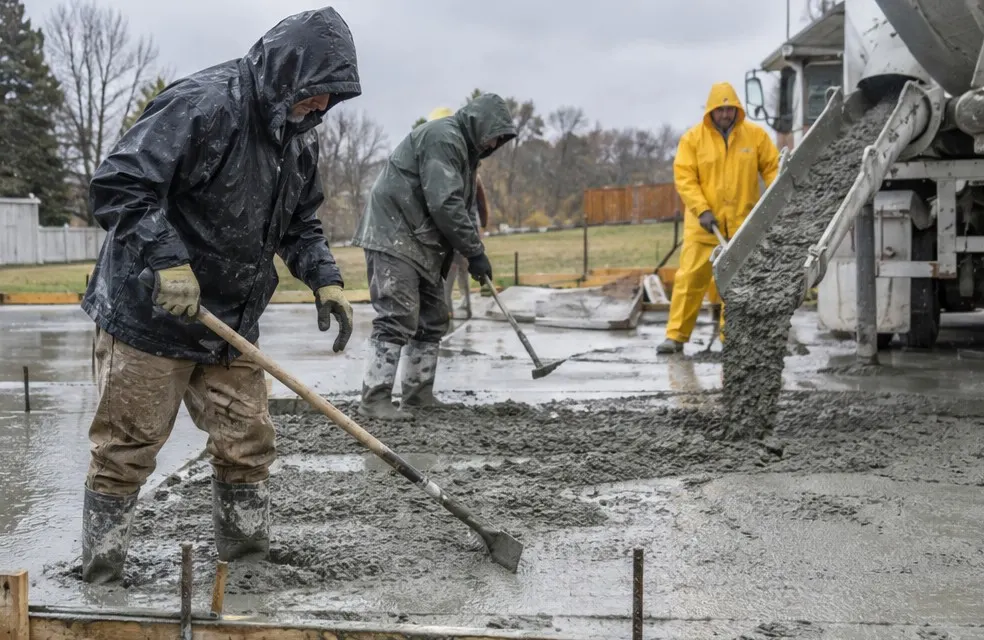
Concrete is a chemical reaction you do not control once the truck leaves the plant. Heat speeds it up, cold slows it down, rain ruins the surface. Planning around the weather is part of the job, and so is keeping customers calm when the date moves.
Temperatures to watch
- Cold: below about 40 degrees, concrete gains strength slowly, and fresh concrete that freezes in the first day or two can be ruined. Pour when temperatures are above about 50 and rising, use blankets on cold nights and ask the plant about accelerators and hot water in the mix
- Hot: above about 90 degrees, concrete sets fast, the surface dries before you finish and cracks show up. Pour at first light, keep the subgrade damp, have extra hands on the finish and ask about retarders
- Wind and low humidity dry the surface fast, even on a mild day. Watch for plastic shrinkage cracks
- Rain: light rain after the finish is set is usually fine. Rain on fresh concrete washes out the surface and ruins a broom or stamped finish. Keep plastic sheeting on the truck
Curing and when people can use it
Tell every customer the same simple rules, in writing:
- Foot traffic: after 24 to 48 hours
- Cars: after about 7 days
- Heavy trucks, RVs, dumpsters: after about 28 days
- Sealer: many sealers want the concrete to cure about 28 days first
Customers who know these numbers do not call you when they want to park on day three.
Your season
- South and Southwest: pouring most of the year. Summer heat is the problem, so pour early and schedule stamped work for cooler months when you can
- Midwest and Northeast: a main season of roughly April to November. Early spring is when patio and driveway requests pile up; fall is when homeowners rush to replace a driveway before winter
- Mountain West: a short season with big swings between day and night. Watch the overnight low as much as the forecast high
How to reschedule without losing the customer
- Check the forecast three and one day out, and decide early. A cancelled pour the night before is fine; a truck turned away at 7 a.m. costs you
- Tell the customer the new date the same day. A homeowner who hears nothing assumes you vanished
- Rebook the next open day, and push the rest of the week in order, with each customer told
- Keep the deposit on the job, not refunded, and say so in your terms: weather moves the date, not the deal
Write it into your terms
Put the weather rules in the quote the customer signs, so nobody argues on a rainy morning:
- Pour dates are targets. Weather, plant delays and soil conditions can move them
- You decide whether conditions are right to pour, because you warranty the work
- The deposit stays on the job when the date moves
- The customer keeps the area clear on the new date: cars out, sprinklers off, pets inside
- Curing rules for foot traffic, cars and heavy vehicles, with the dates written out
A homeowner who read this before signing rarely complains when you move the pour two days for rain. One who never heard it may leave a one-star review.
A scheduling tool that sends the new date to the customer for you saves a dozen calls every rainy week. See how the concrete contractor scheduling software handles it.
The slow months
If winter shuts you down, it is the best time to fill next season:
- Book spring jobs now with a deposit. Homeowners who plan in January are usually serious
- Bid commercial and builder work for the coming year
- Repair and replace equipment, and price your add-ons again with this year's numbers
- Update your website photos with every job from the season, and add pages for the towns you worked
- Ask for reviews from customers you forgot to ask in the rush
- Do indoor work if you can: basement floors, garage slab repairs and resurfacing in heated spaces
Marketing by the calendar
- Late winter: patio and outdoor living ideas, stamped concrete photos
- Spring: driveway replacement, walkways, and reminders to past customers about resealing
- Summer: pool decks and quick slabs for sheds and hot tubs
- Fall: "replace it before winter" for cracked driveways, and booking next spring
Read how to get concrete customers for where to put that message, and Google Business Profile for concrete contractors for seasonal posts.
Frequently asked questions
What temperature is too cold to pour concrete?
Most contractors want temperatures above about 50 degrees and rising, and protect the slab if nights drop below 40. Fresh concrete that freezes in the first day or two can be ruined.
Can you pour concrete in the rain?
Light rain after the finish has set is usually fine. Rain on freshly placed concrete damages the surface, so most crews move the pour and cover anything already finished.
When can I drive on new concrete?
Cars after about 7 days; heavy trucks, RVs and dumpsters after about 28 days.